Your new hires practise on your real cases before handling them.
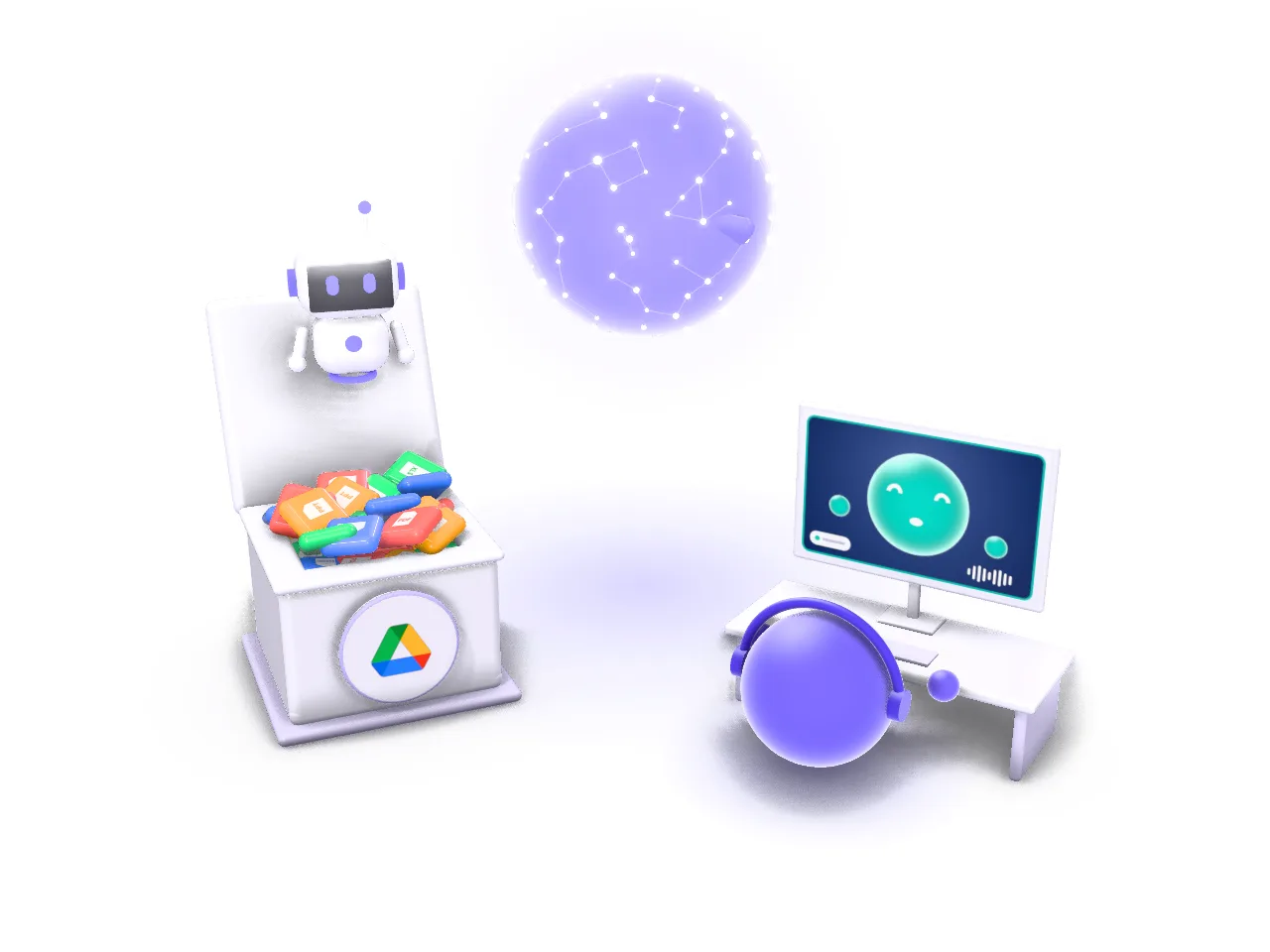
We gather what your key people know and bring it together in one tool, your company's collective digital brain. Your new hires train on it: simulated client calls where the AI plays the client, role-plays, exercises on your own files. They know your prices and the way you work before they face a real file on their own.
30-minute video callno commitmentcovered by an NDA
Today, a new hire learns by interrupting the people who know.
Procedures say what to do. The rest (the exceptions to the rule, how a piece of software is set up) can only be learnt by asking the two or three people who know.
01
Your key people spend their time training others
You hired to take some of the load off them. For the first few months, every question from the new hire goes through them, and what they explain out loud is written down nowhere. With the next new hire, it all starts again.
02
The new hire learns by making mistakes, in front of your clients
When nobody is available, they decide alone: one discount too many, a delivery date that will not be met, a client sent the wrong way. They learn, but your clients notice.
03
Generic training knows nothing about your company
A training provider teaches the trade in general. It knows nothing about your long-standing clients, your rates or the way you handle a complaint.
What your key people explain once can serve every new hire.Engramia turns it into practice on your real cases.
How it works
Your key people have nothing to write, and nobody writes course material.
Step 1 · The material
We gather what your key people know
We go through the tools you connect, without changing anything, and an Engramia expert, trained in gathering knowledge and backed by a specialist in your trade when needed, interviews your key people on real cases. They review what is drawn from it. Everything comes together in your Engramia, your company's collective digital brain.
Read-only
Reviewed by each person
Led by an Engramia expert trained in gathering knowledge
Step 2 · The path
You choose who learns what
For each new hire, you choose the role, the topics and the pace: supplier orders, the price list, handling a complaint. The exercises are built from what your key people have explained.
By role
By topic
Step 3 · Practice
The new hire practises, and the correction comes from the people who know
When they get it wrong, the correction shows them what the key person explained, with that person's name.
Corrections with sources
Updated every month
In the tool, from the learning path to practice
These are the tool's real screens.
01 / 04
Build a learning path in a few clicks
You choose who follows it and which knowledge to pass on, for instance everything the person who left explained. Engramia writes the sessions from your interviews and documents, and you review them.
02 / 04
Role-plays on your real cases
The new hire chooses what they would say to a client, then sees your firm's answer and what the person who knew used to say about it.
03 / 04
Simulated calls
The AI plays your client, with their habits and objections. The new hire answers out loud, a coach prompts them with your key people's reflexes, and the session ends on what has been learnt and what will come back.
04 / 04
Track the team
You see where each new hire is on their path. For anyone falling behind, a note of encouragement is drafted for you to review before sending.
Let's see in 30 minutes where to start with training your new hires
30-minute video callno commitmentcovered by an NDA
Your data is protected, and you decide who sees it.
Hosted in France, in a space of your own
Your space is kept apart from other clients'. The AI that runs it works on our own servers, and your data does not train our models. The one exception, and it is your decision: whatever you open to your own AI agents goes through their provider.
Read-only access to your tools
We read, without changing or deleting anything. You can cut the connection whenever you want.
You decide who sees what
A salesperson has no access to margins, a new hire none to management files. A connected AI agent never sees more than the person using it, and you can open less to it.
Another question? Book a call: 30 minutes by video, covered by a non-disclosure agreement.
You cannot learn a trade in front of a screen.
That is true of part of any trade, and the path does not replace support on the job. It covers what a screen can pass on: your rates and your special cases. Your key people keep their time and patience for what needs them in person.
We already work with a training provider.
Keep them for the trade in general. The Engramia path covers what they cannot know: the way you work and the history of your files.
Will my key people agree to be quoted in the exercises?
They review every passage before it is used. Their name stays attached to what they explained: it recognises their expertise.
How long before the first path is ready?
It is built from interviews that have already been reviewed. So the timing depends on how many interviews have been held, and we set it together at the first call.
Does it work for someone changing roles?
Yes. The path is chosen by role and by topic: someone moving from customer service to sales follows the topics of their new role.
How much does it cost?
Setting up is quoted case by case: it depends on how much data you have and how complex it is. After that, you pay monthly in credits, according to what your teams use: interviews held, documents taken in, your new hires' practice sessions. At the first call, we estimate both together.
What happens when I click "Book a call"?
You choose a 30-minute slot and leave your name and email. The invitation and the video call link arrive in your inbox straight away. During the call, we get to know your company and look at how your new hires are trained today: who trains them, what should be gathered first, and which tools you use, so we know what we will be able to go through. There is no commitment, it is covered by a non-disclosure agreement, and no preparation is needed.
Who holds what your new hires need to learn?
Usually, two or three people. In a 30-minute video call, we look with you at who trains your new hires today, what to gather first, and which tools we will be able to go through.