
01
Documents do not say how things are really done
Procedures are out of date and exceptions are applied by word of mouth. Your RAG system faithfully quotes a document nobody follows any more.
At your client's company, the rules that matter are often written nowhere: two or three members of staff know them. We interview them, gather that knowledge and deliver sourced knowledge cards, ready to index, with a set of questions to test your RAG system. In this offer, we sell your client neither a chatbot nor software: the technology stays yours.
You have done the technical work: chunking, retrieval, prompts, source citations. At acceptance testing, the answers are still wrong on the exceptions and the particular clients. Most of the time, the right information is simply not in the documents you were given.
Procedures are out of date and exceptions are applied by word of mouth. Your RAG system faithfully quotes a document nobody follows any more.

Difficult cases, the “we do it this way because”: a few of your client's staff know them, and their diaries are full.

It means running interviews, having what comes out of them approved and settling between two versions of the same rule. Your client says “that's wrong” without being able to say what is right, and acceptance stalls.
We work at your client's company, in agreement with you, on what the documents do not cover. Your architecture does not change.
With you and your client, we look at the documents and at the questions the assistant has to handle. We identify the critical knowledge and the people who hold it.

Short interviews with the people concerned, on video or on site, using knowledge management methods: explicitation interviews, lessons learned. Each person reviews and approves what was kept from them.
Everything is sorted into short knowledge cards, one idea per card, each with its source, its date and its scope. When two documents contradict each other, the people concerned settle it.
The cards come in Markdown or JSON, with their metadata. They come with a set of questions and answers approved by the people interviewed: you know before acceptance testing whether your RAG system answers correctly.
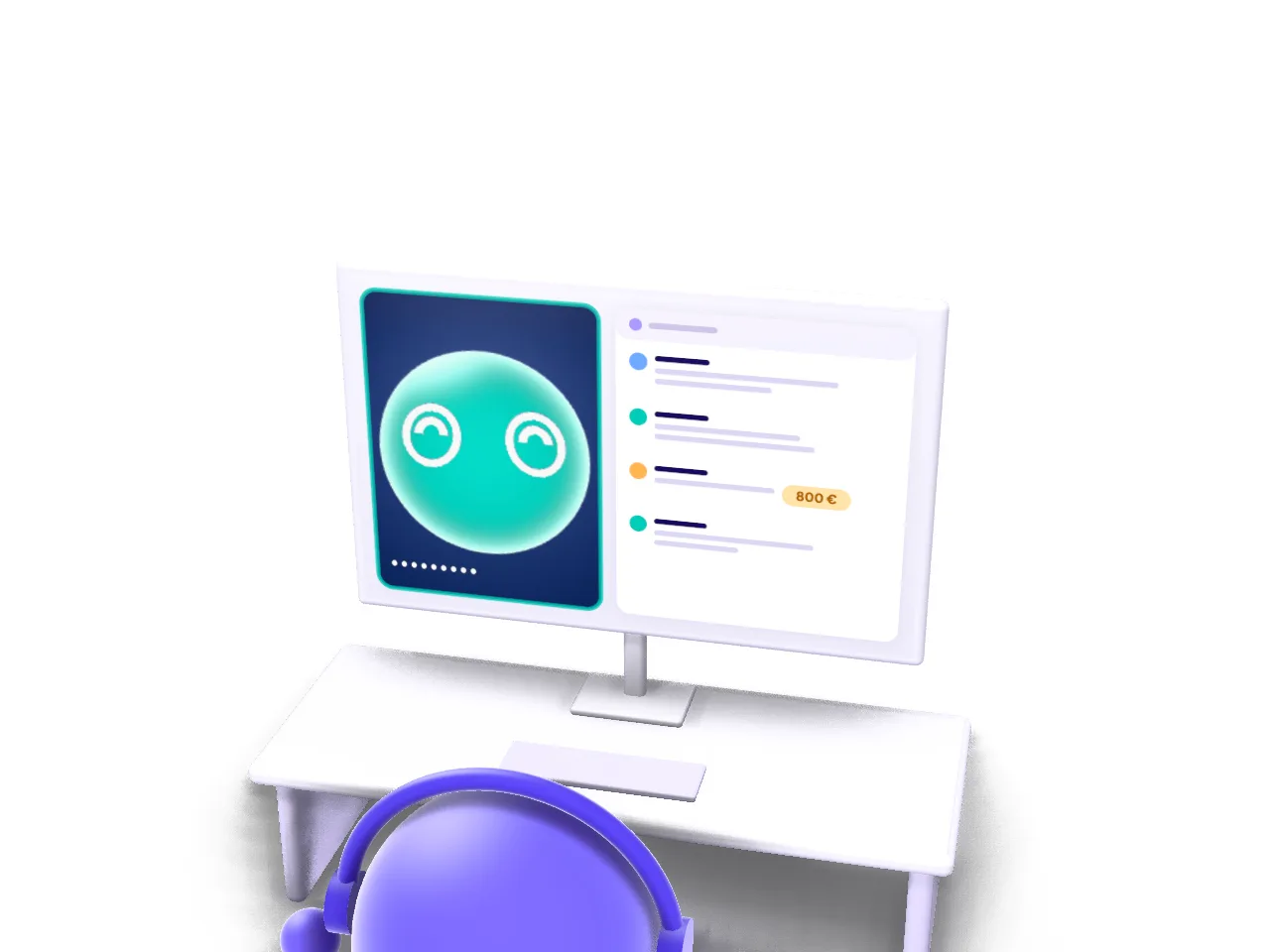
As an option, before the interviews we go through the material your client already has: documents, emails, Slack or Teams threads, tickets. Each question then starts from a real case: “In March, this £800 credit note went through without sales administration. Why?” The person does not have to remember everything: they explain a decision they have in front of them.
We can take on the whole structuring. If you have already gathered or indexed documents, we start from there and run the interviews from them.
A question about a real exchange gets the exception, the context and the reason. A general question gets the procedure.
Nothing is read without the consent of your client and the people concerned, and only within the scope they open.
---
title: Customer credit notes above £500
source: interview of 12/11, head of sales administration
approved_by: head of sales administration, on 14/11
replaces: "Credit notes" procedure, 2021, section 3
scope: customer service, sales administration
---
Above £500, the credit note goes through the head of sales administration, even if the salesperson promised it.

Exception: key accounts, approved by the sales director.
Each card carries its source and the name of the person who approved it: your RAG system can cite both.
A short card chunks cleanly and is easy to retrieve.
The document or interview it comes from, and who approved it, in metadata you can filter on.
The “replaces” field lets you drop from your index the procedure nobody follows any more.
These are the real screens of our interviews: preparation from the material you already have, the interview, the report, then validation. What comes out is the sheets you index.
Before each interview, the expert starts from what you and your client have already gathered: unanswered questions, contradictions between documents, topics nobody has written down.
While the person talks, the control room follows the expert's plan and flags what is still missing. The expert stays in charge of the interview.
After the interview, each piece of knowledge is written up on its own (a rule, a procedure, a dependency), with the session it comes from. Whatever is still open prepares the next session.
They go over each item drawn from their interviews and approve, correct or set it aside. The sheet you receive carries the name of the person who validated it.
You keep your client and your engagement. We take on the interviews and the writing of the cards.
We work within your engagement or alongside it, as you prefer. We never offer your client the technical side, and we commit to that in writing.
You include our part in your quote, or we invoice your client directly and you receive 10% of what we invoice.
Interviews run in parallel with your development, and the first cards arrive before the engagement ends.
Our interview charter applies: everyone approves what is kept from them, and nothing is recorded without their consent.
Engramia meets companies that need a technical side. We introduce them to you.
It answers with the rules applied day to day, and cites their source. Acceptance testing no longer stalls on business questions.
Your assistant answers correctly, and you have not run a single interview.
You send us the questions left unanswered in your logs, and we gather what comes next.
A small team in Aix-en-Provence, in the south of France, specialised in gathering knowledge.
 Pierre Perbet--Mazabras, founder of Engramia
He is the person you meet on the first call. He organises the gathering at your client's company and follows the engagement until the cards are delivered.
 Nico Talle, developer
He works with Engramia the way you would: the technology for him, the knowledge for us.
Another question? Book a call: 30 minutes on video, covered by a non-disclosure agreement.
No. In this engagement we deliver knowledge cards, and we offer your client nothing without talking to you first. The RAG system, the agent or the assistant stays yours, with your technical choices.
Documents describe the procedure as planned; the exceptions applied day to day are not in them. We start from the documents and gather the rest in interviews.
Yes. You give us access to the material you already have, we go through it and run the interviews from it. Otherwise, we take on the whole structuring. As an option, we also prepare the questions from emails and Slack or Teams threads, with the consent of the people concerned.
Knowledge cards in Markdown with their metadata in a header (source, date, scope, person who approved it, version replaced), or in JSON. You index them yourself: we do not touch your code.
The price depends on the number of people to interview and the volume of documents: we send you a written quote after the first call. You include it in your own quote, or we invoice your client directly and you receive 10% of what we invoice.
No, and we commit to that in writing.
We can start before you do, so the knowledge cards are ready when you index.
In a 30-minute video call, we look with you at your client's project, the questions the assistant stumbles on, and the part we could take on.